Talent Acquisition Software for Startups vs. Enterprises: What Actually Changes
Talent acquisition software for startups differs from talent acquisition software for enterprises based on hiring complexity, not company size alone. Compare requirements and key criteria to choose the right talent acquisition solution.

Jyoti Shukla
Senior Sales Manager
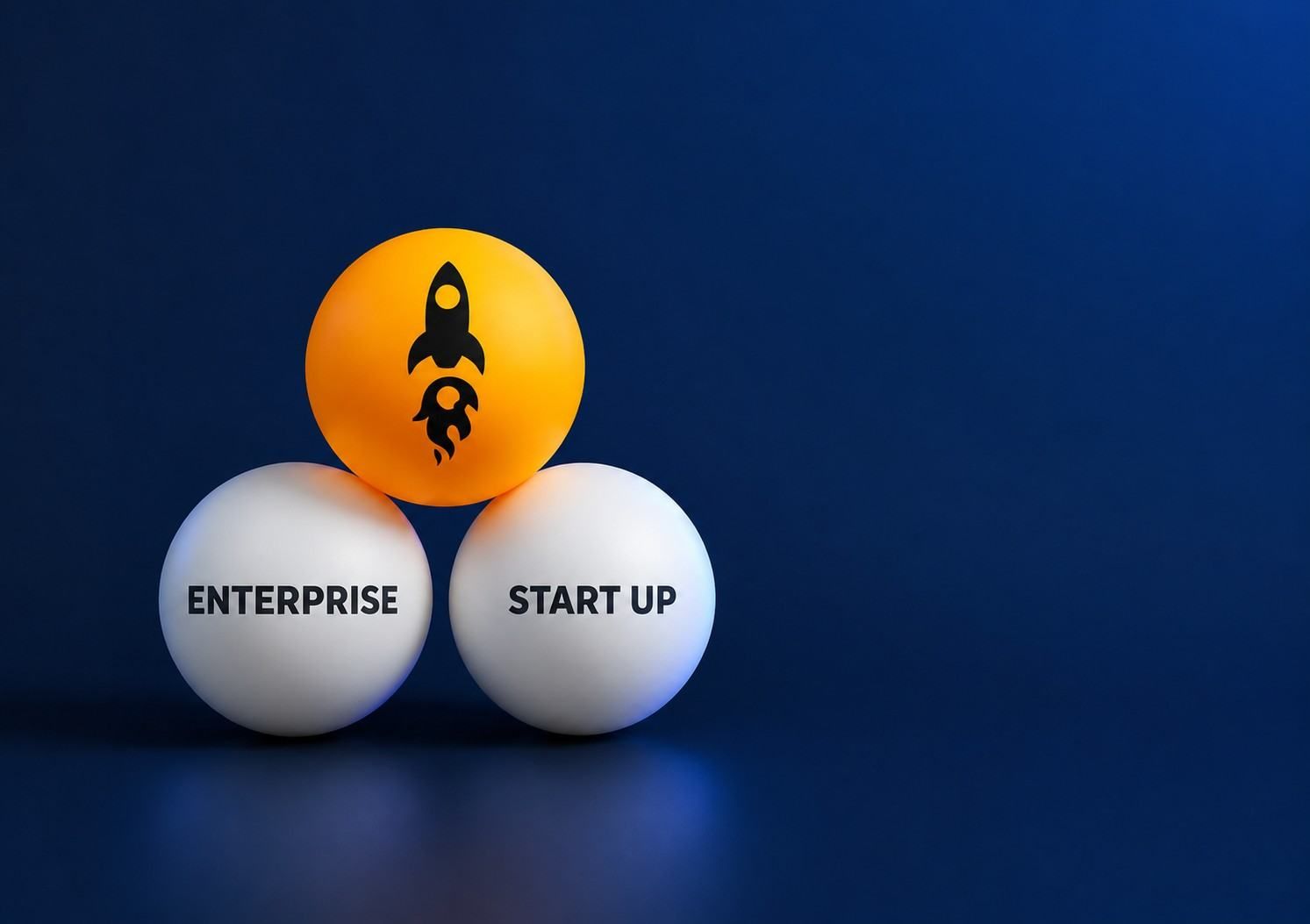
The core functions of talent acquisition software - sourcing, screening, interviews, offers - don't change between a startup and an enterprise. What changes is the buying process, the budget, the compliance load, and the integration depth. Startups need talent acquisition solutions to speed up hiring at low cost; enterprises need governance, security certifications, and HRIS integration. The real dividing line is hiring complexity, including requisition volume, number of stakeholders, or compliance surface, not headcount by itself.
This blog post will guide you on how talent acquisition software for startups is different from talent acquisition software for enterprises and how to compare and evaluate the platforms to select the one suitable for your hiring.
What is Talent Acquisition Software?
Talent acquisition software is a category of recruitment technology that manages the end-to-end recruitment lifecycle. It manages everything from sourcing, screening, and interviewing to offer management, rather than just tracking applications the way a standalone applicant tracking system (ATS) does.
What is the Difference Between Talent Acquisition Software and ATS Software?
The functional difference that actually matters is scope: an ATS software is a system of record for applicants, while a full talent acquisition solution adds sourcing, candidate relationship management, structured interview workflows, requisition approvals, and hiring analytics on top of it.
Also Read: Why Businesses Need Talent Acquisition Software in 2026?
Why Do Talent Acquisition Needs Differ Between Startups and Enterprises?
Here's the reframe that most talent acquisition software for startups vs enterprises comparisons miss: company size is not the only variable. What drives software requirements is hiring complexity, and that's a function of three things:
- Requisition volume and velocity: How many roles are open at once, and how fast that number moves
- Stakeholder count: How many people have to get involved in a hiring decision before an offer goes out
- Compliance surface area: How many entities, countries, and regulatory regimes the hiring process has to satisfy
What Does a Startup Need in Talent Acquisition Software?
Who Handles Recruiting at a Startup?
At most startups through Series A, there is no dedicated recruiter. A founder, a generalist "People" hire, or a part-time HR lead is running hiring alongside four other jobs. Decisions get made fast because there is rarely a second person who needs to sign off.
That changes the software requirement directly: a startup doesn't need multi-level approval chains or elaborate role-based permissions. It needs something that is fast to set up, doesn't require training, and doesn't charge for capabilities a two-person team will never touch.
Volume
Startup hiring is bursty rather than continuous. A hiring freeze after a tough quarter, then a hurry to fill 10 roles after funding closes.
India Today reports that startup hiring growth surged roughly 32% in 2025 while it came down to 12% in 2026 as funding conditions tightened.1 The Foundit Insights Tracker Report 2026 also shows that the share of entry-level hiring at Indian startups dropped over the year as companies shifted toward hiring fewer, more experienced people rather than expanding headcount broadly.2
Budget
Budget is less about finding the most affordable talent acquisition software tools than finding one built to grow with you.
Most platforms in the market are structured in tiers for exactly this reason. A basic plan that covers core sourcing, screening, and tracking, priced for where a team is today, with room to move up a tier or add specific modules (AI screening, requisition approvals, structured feedback forms) only once hiring volume actually demands them. That avoids the two failure modes on either side of it: paying for capability nobody's using yet, or hitting a capacity wall a few quarters in because the software picked at the start has nowhere to grow into.
AI adoption in HR is still uneven by company size. Recent data on agentic AI adoption specifically found roughly 48% of large businesses had adopted agentic AI tools, compared with about 25% of midsized businesses and only 4% of small businesses.3 This is not because small teams don't want the leverage, but because most AI hiring software is priced and configured for enterprise buyers first.
Mistakes Startups Make in Choosing Talent Acquisition Software
- Buying enterprise-grade before you need it: A 20-person startup signing up for a platform built around multi-level approval workflows and complex configuration ends up paying for and configuring governance nobody asked for. The team spends its first month setting up permission structures instead of interviewing candidates.
- Staying on spreadsheets and email past the point it is costing you candidates: This usually breaks the moment two people need to work the same pipeline, or once you are running more than five to ten concurrent open roles. Past that point, candidates fall through the cracks, and feedback gets lost in Slack threads.
What Does an Enterprise Need in Talent Acquisition Software?
Prolonged Buying Process
At an enterprise, buying talent acquisition software is not a single decision but a complete project.
Procurement teams run formal RFPs, and those RFPs commonly run 50 to 500-plus questions covering product capability, implementation timelines, security protocols, and compliance certifications. Data privacy officers and vendor risk teams review SOC 2 and ISO 27001 status, data residency, and breach notification policies as a matter of course before a contract gets signed. Legal, IT, HR, and finance all need to approve the purchase. That process alone can take weeks to months.
Compliance Requirements
India's Digital Personal Data Protection (DPDP) Act, 2023 applies to essentially every organization that processes digital personal data in connection with offering goods or services in India, including startups and MSMEs, not just large enterprises. The DPDP Rules, 2025 were notified on November 13–14, 2025, and implementation is phased over roughly 18 months, with full compliance required by mid-May 2027.
For enterprises operating across entities or countries, some of the compliance product requirements are: audit trails on every action, role-based access that restricts who can see compensation or feedback data, explainable and transparent use of AI, and configurable data handling that can satisfy more than one jurisdiction at once.
See how an enterprise talent acquisition software manages security and compliance.
Integration Depth: HRIS, SSO, and More
A startup's integration is usually a job board and a calendar. An enterprise talent acquisition platform has to sit inside an existing stack: single sign-on through the company's identity provider, two-way sync with the HRIS or HRMS system of record, and connections to background-check and assessment vendors already under contract. The differentiation for large buyers has moved to what sits around the ATS software: sourcing depth, workflow configurability, and analytics.
Budget
Cost reflects all of that complexity. Talent acquisition software for enterprises frequently requires a longer deployment period with separate implementation fees, and sometimes require a dedicated system administrator to manage configuration on an ongoing basis.
Quick Comparison of Talent Acquisition Software for Startup vs. Enterprise
Dimension | Startup (roughly 5–150 employees) | Enterprise (1,000+ employees, or a scaling GCC) |
Who owns hiring | Founder, generalist, or 1–2 person TA function | Dedicated TA team, recruiters, TA leaders, HR business partners |
Hiring volume | 5–50 hires/year, bursty around funding events | Hundreds to thousands/year, continuous |
Buying process | Self-serve signup, decided in days to weeks | Formal RFP, security review, multi-stakeholder sign-off over weeks to months |
Compliance load | Base data-protection law still applies; audit burden is lighter | SSO/SAML, SOC 2/ISO 27001 expectations, cross-border data rules, audit trails |
Integration needs | Job boards, calendar, basic email | HRIS/HRMS sync, enterprise identity provider (SSO), background-check and assessment vendors |
Governance | Minimal: speed over process | Multi-level requisition approval, role-based access, standardized intake |
Primary risk if under-tooled | Losing candidates to a slow, ad hoc process; outgrowing the tool in 12–18 months | Inconsistent process across geographies/units; compliance exposure; falling behind on time-to-fill |
Also Read: 10 Best AI Talent Acquisition Software Platforms for Smarter Hiring in 2026
How to Actually Decide What You Need
Answer four questions before deciding on your talent acquisition platform:
- How many requisitions do you run at once, and how fast does that number move? Under 10 and stable points toward a lightweight tool. Bursty, unpredictable, or already past 10–15 concurrent reqs points toward something built for volume.
- How many people have to sign off before an offer goes out? One or two decision-makers means you don't need multi-level approval workflows yet. Three or more, especially across departments, means you will need configurable requisition and approval workflows sooner than you think.
- What's your compliance and data-residency exposure right now? Single entity, single country: lighter requirements. Multiple entities, cross-border data, or a parent company with existing compliance obligations: prioritize SSO, role-based access, and audit trails from the start rather than retrofitting them later.
- What's your realistic total cost, including implementation and admin time? Talent acquisition software for startups that needs a part-time administrator you don't have is not actually affordable. A talent acquisition platform with a 30-day guided implementation is a very different commitment than one that needs a certified admin on payroll.
Is Talentpool Talent Acquisition Software Built for Startups or Enterprises?
Talentpool recruitment software is designed in a way that suits both startups and enterprises, rather than forcing a choice. There are three pricing tiers.
- Lite is built for startups and small teams centralizing a scattered hiring process, covering up to 100 joiners a year.
- Pro adds the analytics and performance reporting mid-sized teams need, up to 200 joiners a year.
- Enterprise covers full automation, standardized process across departments, and native integration with HRMS, assessment, payroll, and background-verification systems, up to 400 joiners a year.
Pro and Enterprise are custom-quoted, which matches the multi-stakeholder buying process enterprises actually run. Pricing is also per module with unlimited users, which lets a scaling team add capabilities as requisition volume grows, instead of buying a full enterprise suite on day one. Implementation is a structured 30-day guided process with 45 days of priority support afterward, which matters for teams that need to know exactly when they will be live.
That combination tends to fit best for fast-scaling startups that have already crossed into multi-stakeholder hiring, and for enterprise and GCC teams in India and APAC that need requisition governance and compliance-ready access controls without adopting a global suite priced and built for a different market.
Want to know how Talentpool fits in your recruitment process? Schedule a personalized walkthrough now!
Key Takeaways
- Talent acquisition software's core functions - sourcing, screening, interviews, offers - don't change between startups and enterprises. Buying process, budget, compliance load, and integration depth.
- Hiring complexity (requisition volume, stakeholder count, compliance surface), not headcount, is the real variable that determines what a company needs.
- GCCs and fast-scaling startups are the clearest proof that headcount lags hiring complexity: a GCC can go from 50–150 employees to 500–2,000 within three years, needing enterprise-grade governance well before it looks like an enterprise.
- The right buying question isn't "are we a startup or an enterprise?" It is how many requisitions you are running, how many people sign off on a hire, and how much compliance exposure you are carrying right now.
References
1. https://www.indiatoday.in/jobs/story/india-startup-jobs-rise-12-percent-ai-data-mid-level-hiring-2026-2911590-2026-05-14
2. https://www.foundit.in/career-advice/foundit-insights-tracker-july-2026/
3. https://firstpagesage.com/reports/agentic-ai-adoption-statistics/
Frequently Asked Questions
Tags
Jyoti Shukla
Senior Sales Manager
Jyoti Shukla is a key member of the Talentpool team, bringing extensive experience in talent acquisition and recruitment technology to help companies build better hiring processes.